
People experiencing ear pain, hearing difficulty, nasal blockage, repeated sinus problems, throat discomfort, voice changes or sleep-related breathing concerns often search online before contacting a doctor. They want to understand what may be causing the problem, whether specialist attention is necessary and where they can find appropriate ENT care.
A patient may first discover an ENT specialist through a recommendation, Facebook post, YouTube video or Google search. However, these sources do not always provide complete information. Clinic addresses, appointment instructions, treatment details and professional qualifications may be scattered across several platforms.
A professional ENT website gives patients one official place to learn about the doctor, explore available services, read educational content and find reliable contact information. It can connect the doctor’s profile, treatment pages, health articles, videos, phone numbers, clinic location and appointment options within one organised platform.
For Prof. Dr. Zaheer Al-Amin, the website supports communication with patients looking for ear, nose, throat, thyroid, head-and-neck, voice, pediatric ENT and sleep-related care in Dhaka. It allows visitors to review his experience and understand his areas of practice before requesting a consultation.
The website should not attempt to diagnose visitors or replace an examination. Its purpose is to offer responsible general information and make the journey from online research to professional consultation clearer.
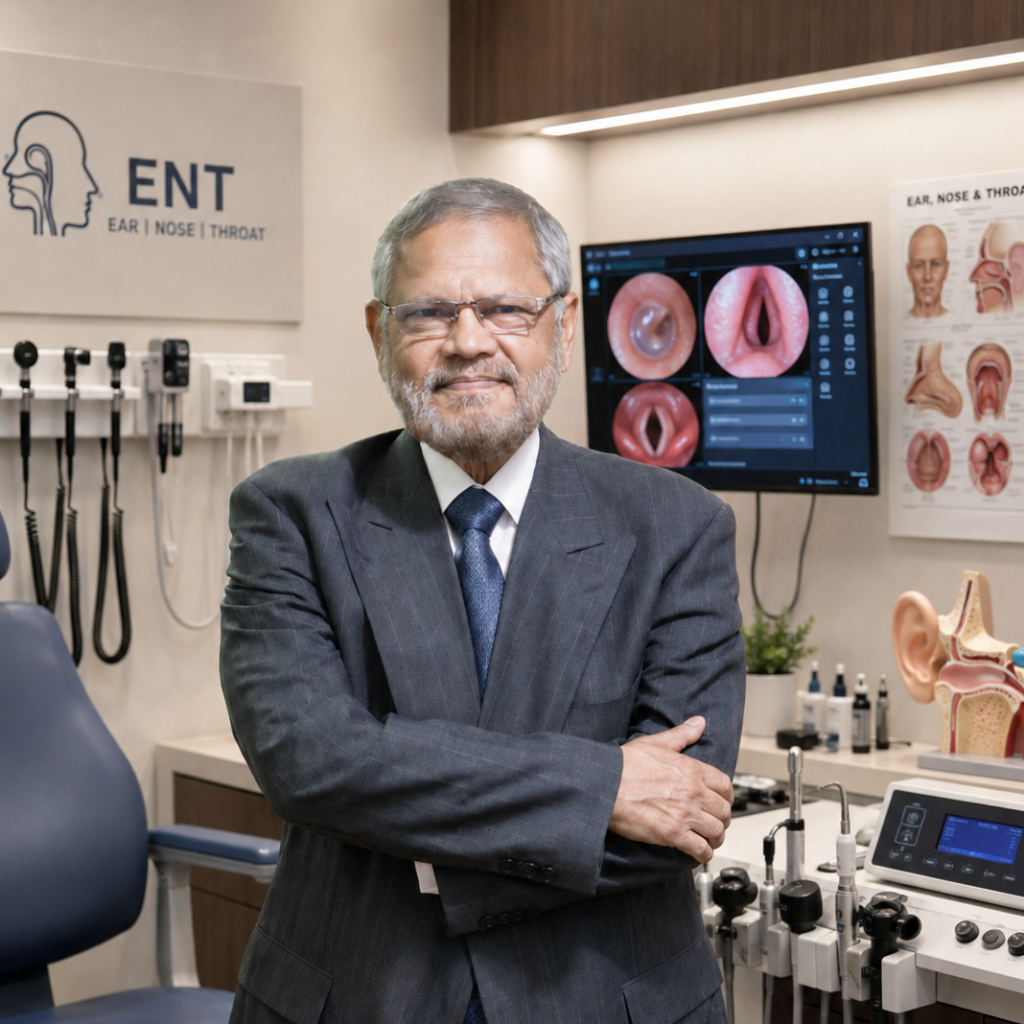
Why Patients Look for ENT Information Online
Many people search online because they are uncertain about their symptoms. An ear may feel blocked without an obvious cause. Nasal obstruction may continue for weeks. A child may experience recurring ear or throat problems. Someone else may be concerned about snoring, difficulty swallowing or a persistent change in voice.
Online information can help patients understand that a problem deserves attention, but it can also create confusion. Search results may include unverified home remedies, incomplete explanations and promotional claims that do not consider individual medical differences.
A specialist’s official website can provide a more responsible starting point. It can explain common concerns in understandable language while reminding visitors that similar symptoms may have different causes.
For example, ear blockage may be connected to wax, pressure changes, infection or another condition. Nasal blockage may be associated with allergy, inflammation, structural problems or other factors. Persistent hoarseness may require a different assessment from temporary voice changes caused by a short illness.
A strong medical website does not tell every visitor that the same condition or treatment applies to them. Instead, it helps readers identify relevant questions and understand when professional evaluation may be appropriate.
This type of content can reduce unnecessary fear while discouraging self-diagnosis. Patients gain enough information to prepare for consultation without being encouraged to choose a procedure independently.
A Professional Website Builds Trust Before the First Visit
Choosing a medical specialist is a personal decision. Patients may be worried about their symptoms, uncertain about a possible procedure or concerned about a child or family member.
Before contacting a clinic, they often want to confirm who the doctor is, where he practises and whether his professional experience relates to their condition. They may also want to know whether the clinic appears active, accessible and responsibly managed.
A well-structured website brings this information together. Visitors can review the doctor’s profile, treatment areas, hospital affiliation, clinic address and contact options without searching through several unrelated sources.
The quality of the website also influences the first impression. Clear navigation, readable content, working images and accurate contact information suggest that the clinic takes patient communication seriously.
An outdated or poorly maintained website can create the opposite impression. Broken photographs, missing service information, inconsistent phone numbers or appointment forms that do not work may cause a patient to leave before speaking with the clinic.
The website cannot prove that a particular treatment will be successful. Results depend on the condition, diagnosis, general health and treatment plan recommended after assessment. However, the website can show that the doctor is identifiable and that professional information is being presented clearly.
This is particularly important when patients discover a doctor through different channels. Someone may watch an educational video, receive the doctor’s name through WhatsApp and then visit the official website to confirm the clinic address and appointment number.
When the doctor’s name, qualifications, services and contact details remain consistent, patients receive a more dependable impression.
It Helps Patients Understand ENT Conditions and Treatments
ENT and head-and-neck care includes many services that may be unfamiliar to patients. A simple list of treatment names is not always enough to explain what each service involves.
Prof. Dr. Zaheer Al-Amin’s website presents services related to ear surgery, sinus surgery, thyroid endoscopy, tumour surgery, skull-base procedures, voice surgery, pediatric ENT and sleep apnea.
A visitor may not understand how these services differ or which area may be relevant to a particular concern. Dedicated pages can introduce each service more clearly.
An ear-surgery page can explain that different ear problems require different investigations and treatment plans. It should not suggest that every ear infection, hearing concern or eardrum problem requires surgery.
A sinus-surgery page can describe why ongoing sinus symptoms may require examination and why the correct treatment depends on the cause. Some patients may need medical management, further investigation or another approach rather than an operation.
A voice-related page can explain why persistent hoarseness or changes in speaking quality should be assessed properly. Pediatric ENT content can help parents understand why children may need age-appropriate evaluation for recurring ear, nose or throat problems.
Sleep-apnea information can explain the importance of assessing snoring and sleep-related breathing interruptions without attempting to confirm the condition online.
A useful treatment page should describe the general purpose of the service, why examination is necessary and what questions a patient may want to ask during consultation. It should avoid guaranteed results or language suggesting that one treatment is suitable for everyone.
This approach improves the quality of enquiries. Patients who have reviewed the relevant information are more likely to contact the clinic with focused questions and realistic expectations.
The Doctor’s Profile Establishes Professional Authority
Patients choosing an ENT specialist are not only comparing treatment names. They are also evaluating the professional who will examine them and recommend the next step.
A doctor’s website should therefore include an accurate professional profile. Qualifications, experience, hospital affiliations and areas of practice should be easy to find.
Prof. Dr. Zaheer Al-Amin’s website presents him as an ENT and head-and-neck surgery specialist in Dhaka. It identifies his former role as Professor and Head of ENT at BIRDEM Medical College and his current position as a Senior Consultant at SIBL Foundation Hospital.
The website also states that he has more than 35 years of experience and has treated over 200,000 patients. His areas of practice include sinus surgery, ear surgery, thyroid surgery, skull-base procedures, voice disorders, pediatric ENT and sleep-apnea treatment.
These details help visitors understand the professional background connected to the services being presented. They should remain factual and should not be combined with unsupported claims such as guaranteed success or risk-free treatment.
A responsible profile acknowledges that treatment recommendations and outcomes differ between patients. The doctor’s experience can be presented confidently without suggesting that every person will receive the same result.
The website should also identify who is responsible for medical information. Educational articles can include an author or medical-review note where appropriate. This helps visitors distinguish professionally reviewed content from general promotional material.
Professional information must remain current. Changes in consultation hours, clinic locations, hospital affiliations or phone numbers should be updated promptly. Outdated details can create confusion and weaken confidence.
Educational videos can further support professional authority. Hearing the doctor explain a common problem may help patients understand his communication style and approach to consultation.
Written information should remain available alongside video because some users cannot watch with sound, while others prefer to scan the main points quickly.
Patients Can Explore the Main Areas of ENT Care
A clear services section helps patients understand whether the doctor’s practice covers their type of concern. Each service card should ideally lead to a useful page rather than functioning only as a visual element.
Ear, Nose and Sinus Care
Ear-related pages can introduce problems involving hearing, the eardrum, repeated infection or other structures of the ear. The information should explain that assessment is required before deciding whether medical treatment, observation or surgery may be appropriate.
Sinus-related content can address persistent nasal obstruction, recurring sinus symptoms and other problems affecting breathing through the nose. It should clarify that the cause must be identified before treatment is selected.
These pages can also link to related educational articles. A blog post about blocked ears can guide readers toward the relevant ear service, while an article about ongoing nasal obstruction can connect to sinus care.
Thyroid, Tumour and Skull-Base Services
Information about thyroid, tumour and skull-base conditions must be written carefully. Patients may become anxious when they encounter unfamiliar terminology.
The content should explain the doctor’s role in assessment and treatment without implying that every swelling, throat symptom or neck concern represents a serious disease.
A tumour-surgery page should encourage timely professional evaluation while avoiding unnecessary fear. A skull-base page should use accessible language because many patients may not understand where the skull base is or why specialised care may be required.
The purpose is to help patients recognise the relevant area of expertise, not to make them diagnose themselves from a description.
Voice, Pediatric ENT and Sleep Apnea
Voice-related services can help patients understand why persistent hoarseness, vocal strain or other changes may require examination of the throat and vocal structures.
Pediatric ENT pages can address common reasons children are referred for assessment, such as recurring ear problems, nasal obstruction or repeated throat concerns.
Sleep-apnea content can explain the relationship between snoring, interrupted sleep and breathing difficulties while making clear that diagnosis requires proper evaluation.
Grouping services in this way makes the website easier to understand without overwhelming visitors with too many separate explanations on one page.
Appointment Booking and Communication Should Be Simple
After reviewing the doctor and services, the patient should have a clear next step. Contact information should not be hidden inside complicated menus or long pages.
A professional ENT website can include a visible appointment button, clickable phone numbers, a short form, clinic addresses and a map.
These features must connect to the clinic’s real workflow. A form is only useful when submissions reach the correct team member. A WhatsApp button should lead to an active number, and appointment requests should be monitored.
The website should explain whether submitting a form confirms an appointment or simply sends a request. A short message stating that the clinic team will contact the patient for confirmation can prevent misunderstanding.
The initial form should remain simple. It may request the patient’s name, phone number, preferred contact method and general reason for consultation.
A basic website form should not request unnecessary sensitive medical details unless the clinic has an appropriate system for protecting and managing that information.
Accurate location details are equally important. Patients travelling from another part of Dhaka or from outside the city may need a full address, nearby landmarks and a working map before beginning their journey.
Clear service information can also reduce repetitive enquiries. When patients understand the clinic location, appointment process and areas of care, staff can focus more attention on people ready to arrange consultation.
Mobile Access Matters for Medical Website Visitors
Many patients access medical websites through smartphones. They may be travelling, helping a family member or searching while experiencing discomfort.
For these users, the mobile version is often the primary version of the website.
Text should be readable without zooming. Buttons should be large enough to select, phone numbers should be clickable and the menu should remain simple.
A patient should be able to identify the doctor, explore a service, locate the clinic and request an appointment without navigating through unnecessary steps.
Page speed also matters. Doctor photographs, service images, maps and embedded videos can support patient education, but they can make a page slow when they are not properly optimised.
Images should be compressed while maintaining suitable quality. Videos should be embedded efficiently, and unnecessary scripts or plugins should be reviewed.
A slow page may prevent a patient from reaching important contact information. This is especially relevant for people using weaker mobile connections.
Accessibility should also be considered. Readable fonts, suitable contrast, descriptive image text and logical headings make the content easier to use for a wider audience.
Local Search Visibility Connects Patients with the Clinic
Patients often search with location-based terms such as ENT specialist in Dhaka, ear doctor near me, sinus specialist, pediatric ENT doctor or head-and-neck surgeon.
A properly structured website helps search engines understand who the doctor is, where the clinic is located and what services are offered.
The doctor’s name, address and phone numbers should remain consistent across the website, Google Business Profile and legitimate professional listings.
Each important service should have a focused page. Supporting blog posts can answer narrower questions and link to the relevant service.
For example, the main sinus page can explain the service and consultation process. A supporting article can discuss possible reasons for persistent nasal blockage. These pages serve different patient needs and should connect naturally.
Search terms should not be repeated excessively. Inserting “best ENT specialist in Dhaka” into every section can make the content appear unnatural and reduce credibility.
The objective of local SEO is not simply to attract more visitors. It is to help relevant patients find accurate information and reach the correct contact or appointment page.
Photos, Videos and Blogs Should Be Used Responsibly
Visual content can make an ENT website more informative and approachable. Professional photographs help visitors recognise the doctor and understand the clinic environment before arriving.
Useful images may show the doctor in consultation, the reception area, relevant equipment or approved educational diagrams.
Patient photographs should only be published with appropriate permission. Personal information should not be visible without consent.
Before-and-after images require additional care. They should not suggest that every patient will experience the same result. Outcomes can vary according to the condition, treatment plan, overall health and individual response.
Videos can help explain symptoms, consultation procedures and general treatment considerations. They also allow patients to become familiar with the doctor’s communication style.
However, videos should not replace written information. A written summary helps visitors who cannot watch with sound and supports those who prefer reading.
Educational blogs can answer common questions about blocked ears, nasal obstruction, sinus symptoms, voice changes, childhood ENT problems and sleep-related breathing concerns.
These articles should provide general information without diagnosing the reader. They should explain that symptoms can have different causes and that treatment depends on assessment.
Every article should connect to a relevant service or contact page. This creates a natural path from patient education to professional consultation.
Maintenance, Security and Professional Digital Support
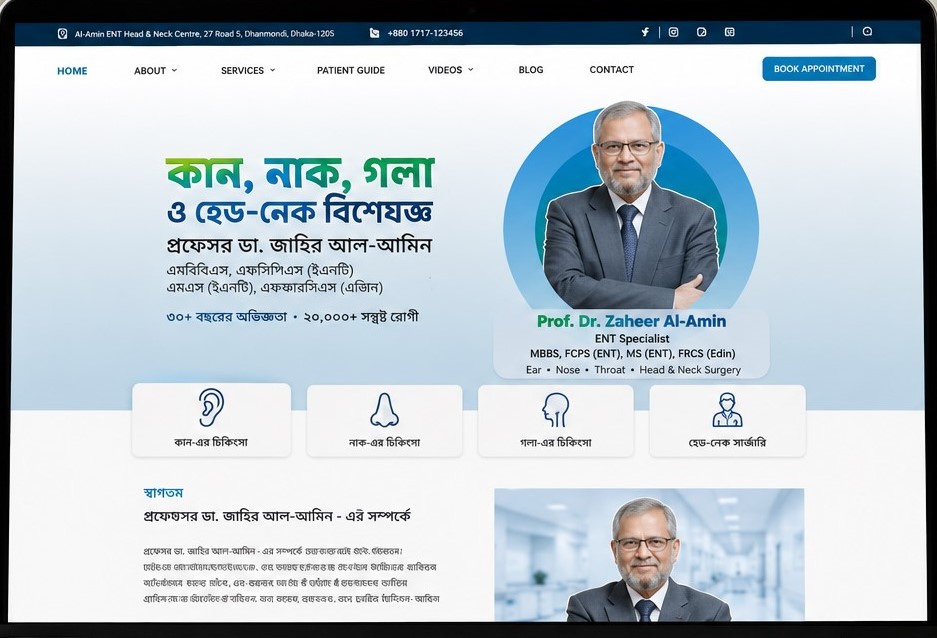
A medical website must continue working after launch. Phone numbers, clinic locations, consultation arrangements and service information may change over time.
Technical maintenance is equally important. WordPress files, themes, plugins, forms and security systems require regular review.
Backups should be created routinely. Administrative accounts should use strong passwords, and only authorised users should have access to important settings.
Contact forms should be tested to confirm that enquiries reach the intended recipient. Broken links, missing images and incorrect buttons should be repaired promptly.
The clinic should also review what information is collected through forms. Only the details required for initial communication should be requested unless a secure system is available for sensitive medical information.
Where internal technical resources are limited, a specialist partner such as Kaizen Digital Hub can support website development, search optimisation, speed improvement and ongoing technical maintenance.
The clinic should retain ownership and administrative control of its domain, hosting, analytics and website accounts. The agency’s role is to maintain and improve the platform, while medical information remains subject to review and approval by the qualified healthcare professional.
Regular maintenance protects more than the website’s appearance. It supports patient access, organic visibility and the effectiveness of social-media or advertising campaigns that send visitors to the site.
The visual should focus on the completed medical website rather than appearing as a separate advertisement for the agency.
What a Strong ENT Website Should Provide
A strong ENT website should help a new visitor answer several basic questions without unnecessary difficulty.
The visitor should be able to identify the doctor, understand the main areas of care, find the clinic, review educational information and request an appointment.
A clear doctor profile provides professional context. Dedicated service pages explain available care. Blog posts answer focused patient questions. Contact and appointment pages turn research into communication.
Privacy information, reliable forms, website security and regular updates should also be part of the operating process.
These elements should not be added simply to make the website appear larger. Every page should serve a practical purpose.
The clinic can periodically review the website from a patient’s perspective. Staff can test whether someone unfamiliar with the site can find the doctor’s background, locate a relevant service and request an appointment without confusion.
The Website Does Not Replace Medical Assessment
A professional ENT website can help patients prepare for consultation, but it cannot examine the ear, nose, throat or neck.
It cannot confirm the cause of hearing loss, determine whether surgery is required or select the correct treatment based only on an online description.
Patients should use website content as general guidance rather than personal medical advice. The information can help them recognise relevant services, prepare questions and understand how to contact the clinic.
Professional evaluation becomes particularly important when symptoms are persistent, worsening or affecting normal activities.
Urgent medical attention may be necessary for severe breathing difficulty, sudden hearing changes, significant bleeding, serious swallowing problems or another rapidly developing concern.
An ordinary website form should not be relied on during an emergency. Patients requiring urgent assistance should contact an appropriate medical facility or emergency service.
Final Thoughts
A professional ENT website helps patients find reliable information, understand available services and communicate with the clinic more easily.
For Prof. Dr. Zaheer Al-Amin, the website creates one official platform where visitors can review his experience, explore ENT and head-and-neck services, watch educational content, find clinic details and request an appointment.
Its value depends on more than visual design. Clear treatment information, responsible medical content, mobile usability, reliable contact options, search visibility, security and ongoing maintenance all contribute to the patient experience.
The website should not diagnose visitors, select treatments on their behalf or promise identical outcomes. Its purpose is to provide useful general information and make the journey toward specialist consultation clearer.
Patients experiencing ear, nose, throat, thyroid, voice, pediatric ENT, sleep or head-and-neck concerns can explore the available information and contact Prof. Dr. Zaheer Al-Amin’s clinic to request an individual consultation.